Walkways
Pedestrian Bridge Design
The client is a USA-based company specializing in Gangways, Pedestrian Bridges, Catwalks, Floating Docks, Marina Access Gates, and Floating Restrooms. With 45 years of innovation, they are committed to transforming their industry. Their integrated production process ensures seamless transitions and keeps customers at the forefront throughout the project lifecycle.
Scope
The client approached us with a 60 feet long, 4 feet high, 9 feet wide pedestrian bridge concept and needed complete design, detailing, and fabrication drawings. They provided site drawings and required precise fabrication, and erection plans for all structural steel components, including fasteners and consumables.
We were tasked with:
- Designing key structural assemblies, including pre-assembled frames, beams, and braces for efficient fabrication.
- Performing engineering analysis to ensure the bridge meets strength, stability, and industry standards.
- Providing detailed fabrication drawings to simplify manufacturing and on-site installation procedure.


Challenge
The challenges in designing the pedestrian bridge were significant, including:
- Balancing strength with efficiency – The bridge needed to handle heavy pedestrian traffic while keeping deflection and vibration within safe limits. Achieving this without adding unnecessary weight or cost was a critical challenge.
- Meeting safety & code requirements – The structure had to comply with AASHTO LRFD standards, ensuring it could withstand live loads, wind forces, and seismic activity without compromising safety.
- Weather durability – The bridge had to perform reliably in different weathers, from freezing winters to humid summers. Corrosion, material fatigue, and expansion/contraction due to temperature changes needed careful consideration.
- Manufacturing & installation constraints – The design had to allow easy fabrication and assembly, using a modular approach for quick transport and installation. We had to optimize the strength-to-weight ratio while reducing welding and extra processing for efficient manufacturing.
Solution
Leveraging our structural steel design services, our team carried out structural analysis and engineering design to develop a fabrication-ready pedestrian bridge. The goal was to ensure strength, durability and ease of manufacturing, all while meeting industry standards.
Our solution included:
1. Material selection
Our team carefully analyzed materials to ensure the bridge could withstand all weather conditions. We chose corrosion-resistant steels like ASTM A709 Grade 50W and A588, which provided an optimal balance of strength (345 MPa yield) and weight.
These materials enhance the bridge's structural durability in high humidity and extreme temperatures, ensuring long-term performance without additional coatings.
2. Structural design and analysis
The bridge was evaluated for pedestrian live loads, wind, seismic forces and other applicable loading conditions. The design also considered deflection and vibration to support safe and comfortable pedestrian use.
Structural analysis and design were carried out in accordance with the applicable requirements of AASHTO LRFD and AISC.
3. 3D modeling & detailing
Using Tekla Structures, our team developed a detailed 3D model covering the bridge frames, beams, braces, connections and fasteners.
The model was used to develop fabrication drawings and provide accurate information for manufacturing and assembly. This helped coordinate the structural components before fabrication.
4. Optimized fabrication & installation
We designed modular sections that simplified manufacturing and transportation. Using DFMA (Design for Manufacturing and Assembly) and DFMEA (Design Failure Mode and Effects Analysis), we ensured the bridge could be fabricated with minimal welding and installed quickly on-site.
The team also developed the erection sequence and supporting documentation to help with material handling and on-site installation.
5. Coating & assembly considerations
The detailing incorporated requirements for protective coatings, connections, and assembly to support the bridge's expected service conditions.
Assembly and erection considerations were addressed during the design stage so that components could be manufactured, transported, and installed efficiently.
The final deliverables included detailed 3D models, fabrication drawings, material specifications, and erection documentation to support manufacturing and installation.

Value and Benefits
Our precise 3D models and detailed drawings eliminated guesswork and helped fabricators create steel components to exact specifications while avoiding costly mistakes and rework.
By optimizing material use and reducing waste, we helped the client cut costs while keeping the project efficient and streamlined.
Clear fabrication and erection details sped up production and installation, allowing the client to meet tight deadlines without delays.
Every component was designed to meet the highest standards, delivering a strong, reliable structure built to last.
Our thorough documentation made regulatory approvals smooth and provided valuable records that can be used for future maintenance, repairs, or modifications. This documentation can be crucial for understanding the original design and making informed decisions.
Related Case Studies


Steel Structural Design for Grain Storage Solution
Steel structure design for grain storage bins, engineered to withstand wind and seismic loads while providing safe maintenance access & material handling.


Designing an Efficient and Movable Walkway for Trench Safety
Our trench walkaway design helped the client with easy manufacturing while ensuring safety and compliance.


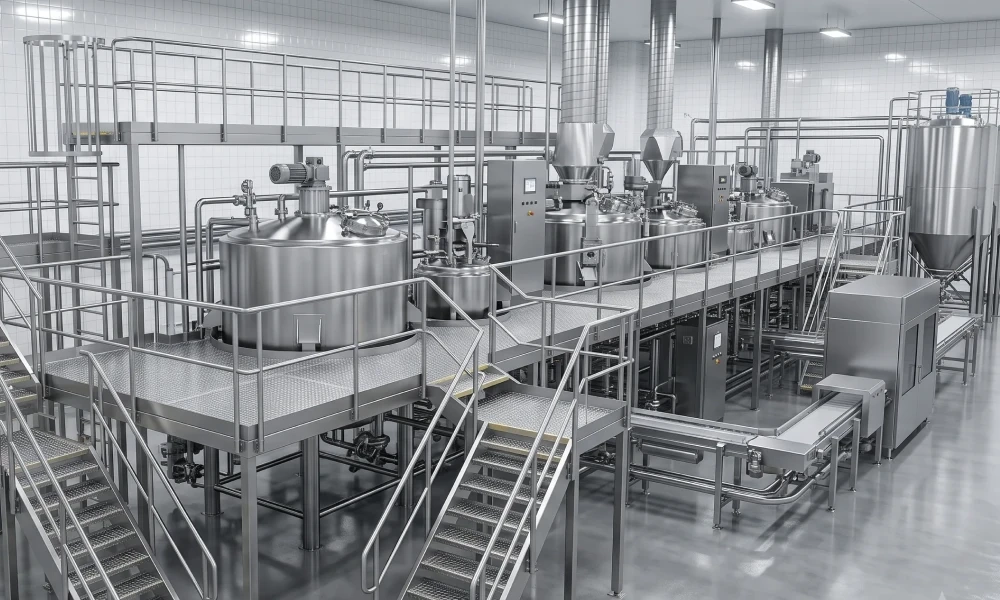
Industrial Access Platform Design & Detailing for a Food Processing Plant
Delivered industrial access platform and structural steel detailing for a food processing plant, from 3D modeling to fabrication-ready drawings.